Is Barefoot Footwear Right for You? A Podiatrist's Complete Guide to Making the Switch
I have spent my career at the intersection of foot health and whole-body wellness, and one of the questions I get asked most frequently is this: "Should I try barefoot shoes?"
My honest answer? For many people, yes. But, you must approach the transition the right way.
I am thrilled to partner with Groundies, one of the leading barefoot footwear brands in the world, to bring you a complete, clinically grounded guide to transitioning from conventional footwear to barefoot-style shoes. This is not a marketing piece. It is the same guidance I give my patients and is designed to help you avoid the pitfalls that send so many enthusiastic new barefoot shoe wearers straight to a podiatrist's office with an overuse injury.
Let's get into it.
What Actually Makes a Barefoot Shoe Different?
Before you can make an informed decision, you need to understand what separates a barefoot shoe from conventional footwear. The differences are functional and biomechanical.
ZERO DROP
Most conventional athletic shoes have an 8–12mm heel-to-toe drop, meaning the heel sits significantly higher than the forefoot. Over years of wear, this elevation shortens the Achilles tendon, tilts the pelvis forward, and trains you into a heel-strike gait that increases impact forces through the ankle, knee, and hip. A zero-drop shoe places heel and forefoot at exactly the same height and restores the natural position your foot was designed to assume.
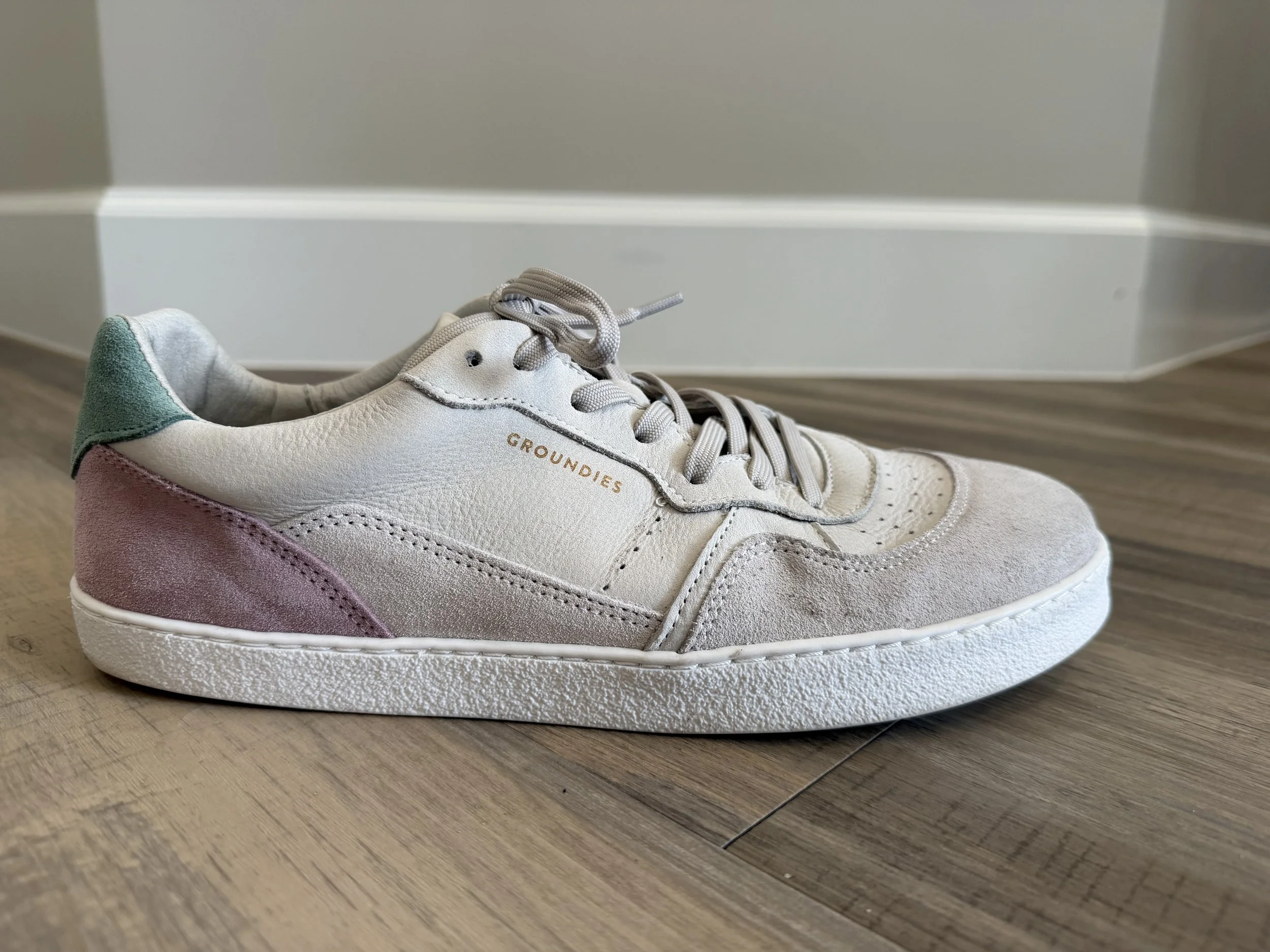
Zero drop shoes place the heel and forefoot at exactly the same height.
WIDE TOE BOX
This is, perhaps, the feature that surprises people most powerfully when they first wear a true barefoot shoe. Your toes are meant to splay. They are meant to spread, grip, and actively contribute to balance and propulsion. Conventional shoes taper toward a point that compresses the toes into an unnatural cluster. This compression is one of the primary structural causes of bunions, hammertoes, neuromas, and impaired balance. Groundies designs their toe boxes to follow the actual anatomical shape of the human foot. When you first slip your foot into one of their shoes and feel your toes release into the space, it genuinely feels like freedom.
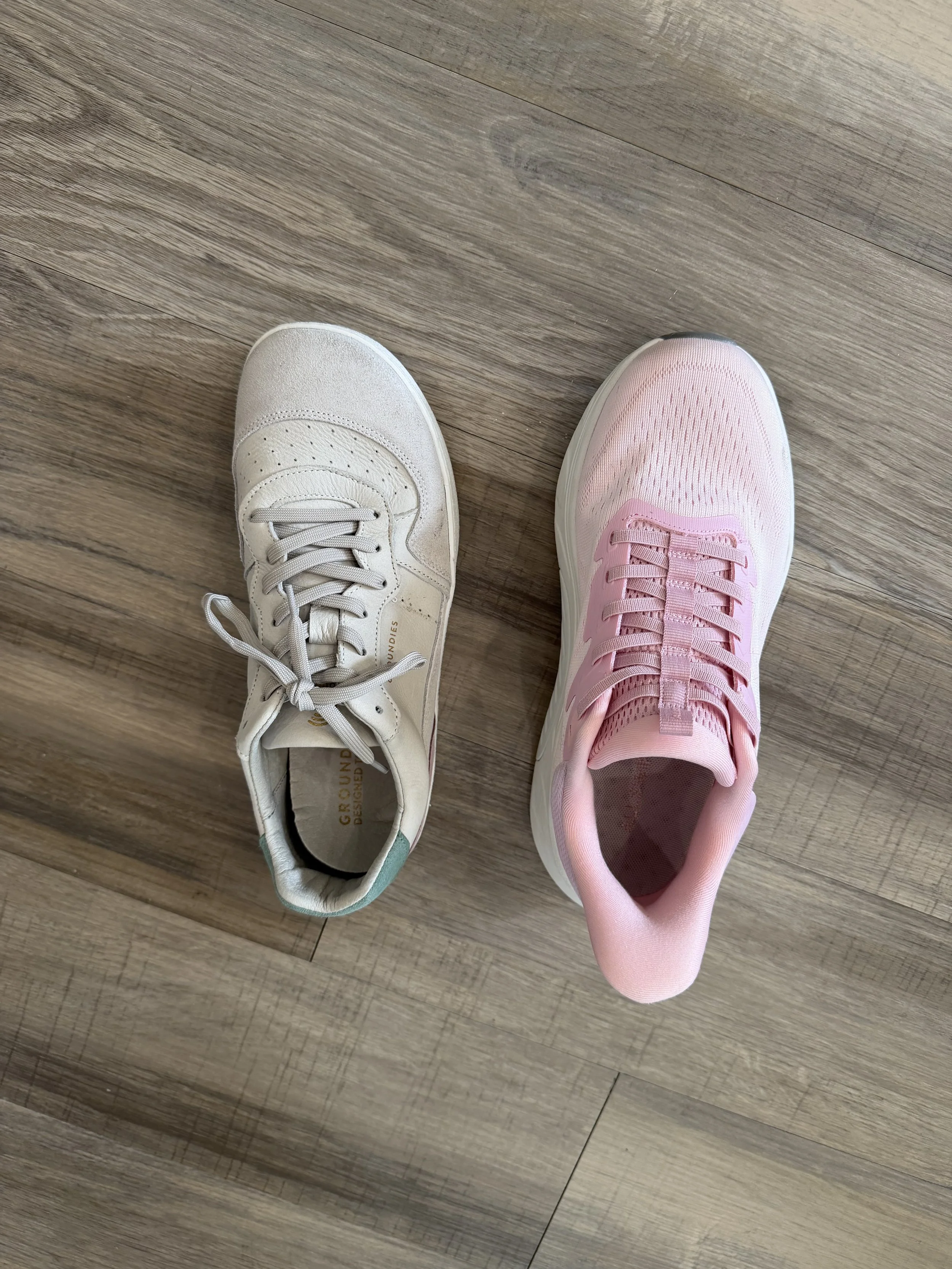
Barefoot shoe with wide & anatomical toe box on the left. Conventional athletic shoe with tapered toe box on the right.
THIN & FLEXIBLE SOLE
The sole of a barefoot shoe is intentionally thin, usually around 3–8mm, and designed to flex with every movement of the foot. This engages the 20+ intrinsic muscles of the foot with every step, rebuilding strength that decades of rigid, cushioned soles have allowed to atrophy. The thin sole also transmits sensory information from the ground to the nervous system. This is proprioceptive feedback that thick midsoles completely block.
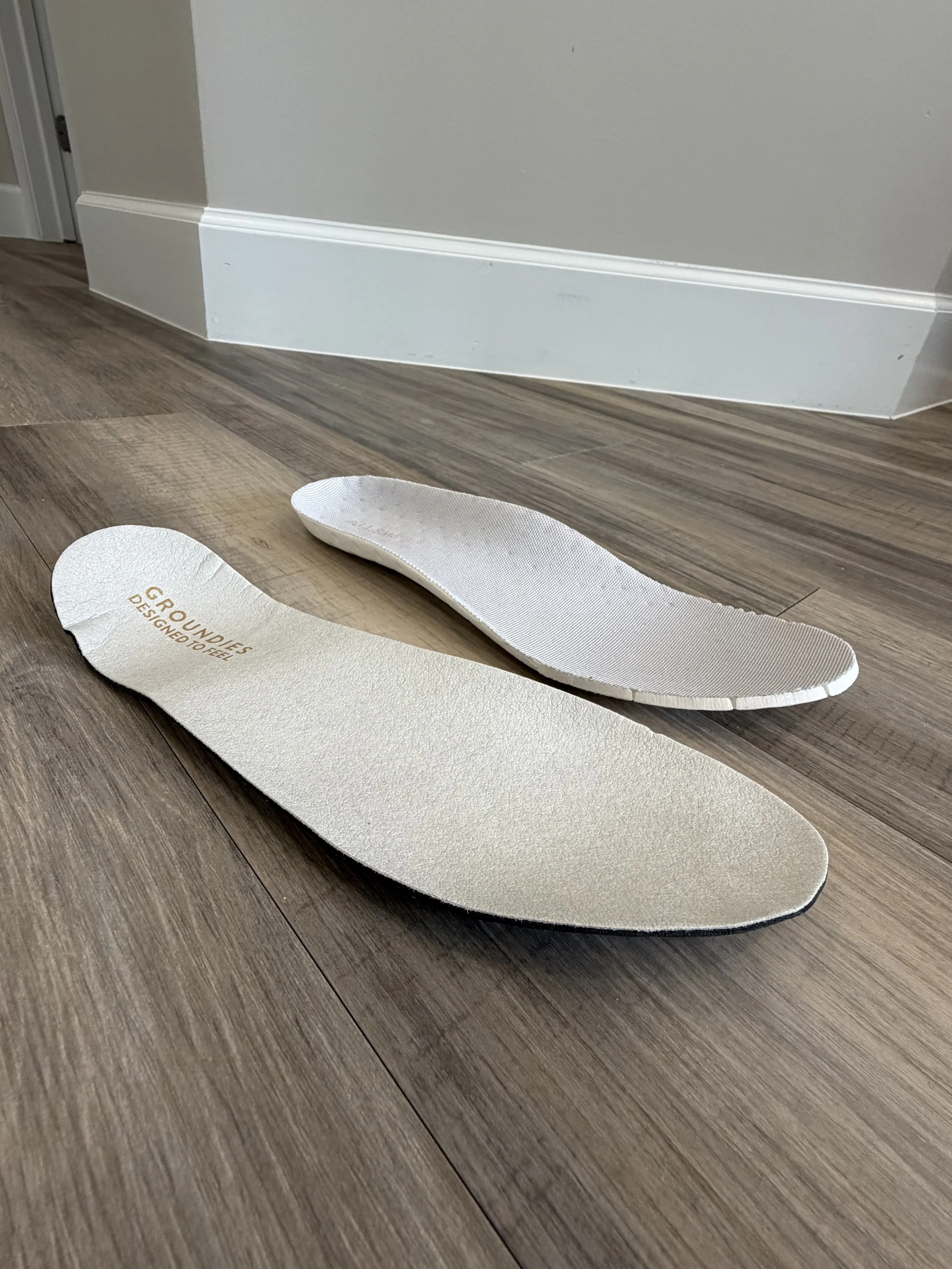
Barefoot shoe insole in the front. Traditional athletic shoe insole in the back.
ARCH SUPPORT
I know. This sounds alarming. But bear with me. Arch supports built into conventional shoes do the structural work your intrinsic foot muscles should be performing on their own. Over time, this external support actually weakens the active arch support system. A barefoot shoe's flat, neutral footbed challenges the foot to support itself. And, with a proper transition, it absolutely will.
LIGHTWEIGHT CONSTRUCTION
Barefoot shoes are significantly lighter, which reduces energetic cost per stride and allows for more natural gait mechanics. Groundies' TrueSense® technology is specifically engineered to deliver ground-feel and sensory input while maintaining protection. It is a beautifully functional approach to minimalist design.
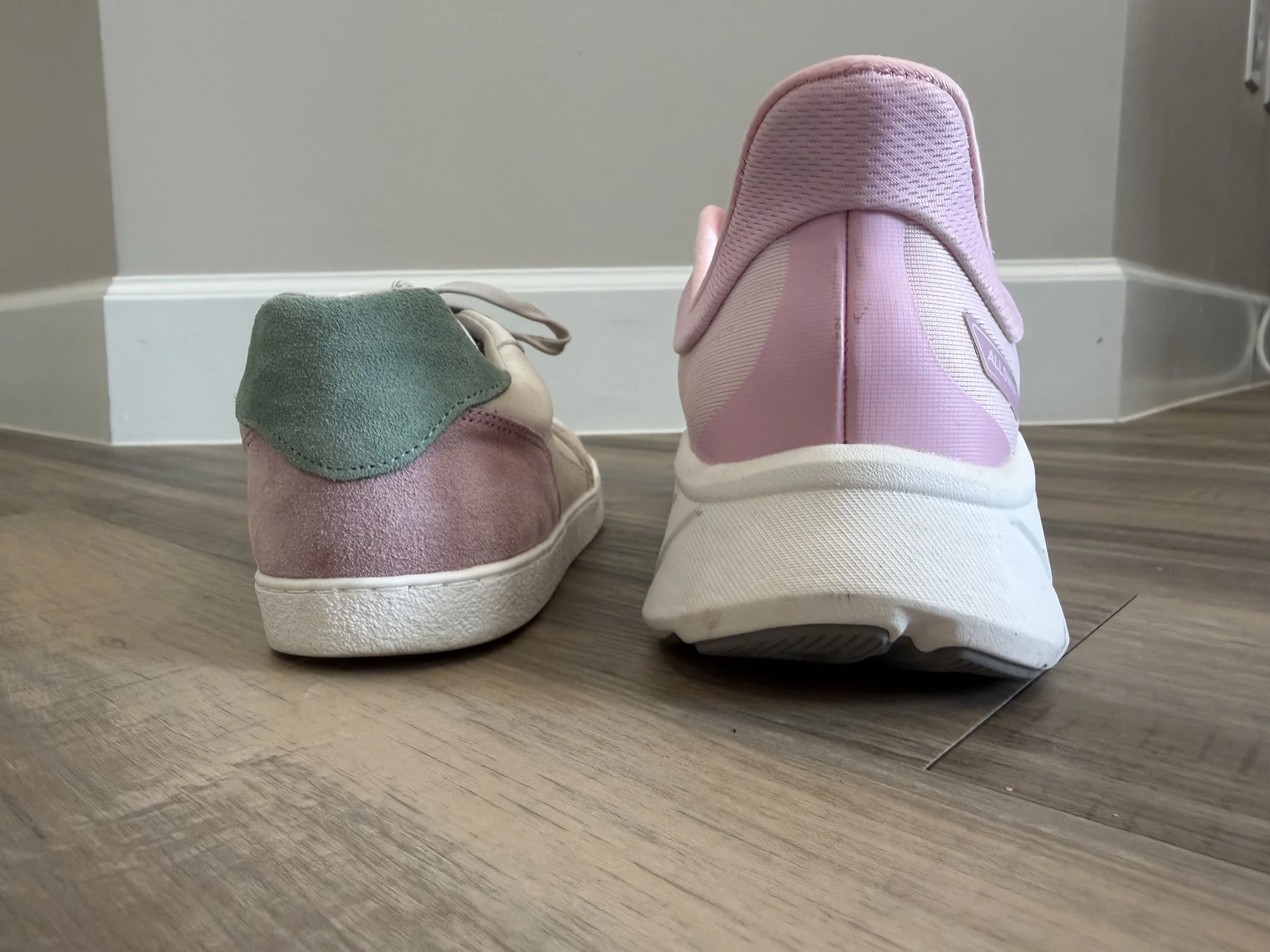
Barefoot shoe on the left. Traditional shoe on the right.
The Real Benefits — What the Science Shows
I want to be direct: the benefits of barefoot footwear are real, but they are not automatic. They emerge over weeks and months of intentional transition. When that transition is done correctly, here is what research and clinical experience consistently support:
Stronger Intrinsic Foot Muscles. Multiple peer-reviewed studies have demonstrated measurable increases in the cross-sectional area of intrinsic foot muscles in subjects who transitioned to minimalist footwear over 12–24 weeks. These are the muscles that form your active arch and provide dynamic foot stability with every step.
Improved Proprioception and Balance. The soles of your feet contain an exceptional density of mechanoreceptors which are sensory nerve endings that communicate position, pressure, and movement information to your brain. Thick-soled shoes dramatically reduce this input. Barefoot footwear restores it. Studies show meaningful improvements in balance and postural stability in barefoot shoe wearers, with particular relevance for older adults at fall risk.
Better Posture and Reduced Back Pain. Heel elevation in conventional shoes produces anterior pelvic tilt and increased lumbar lordosis. Zero-drop footwear restores neutral pelvic alignment. I have had patients in my practice report significant reduction in chronic low back discomfort after a successful transition. The biomechanics explain exactly why.
Reduced Risk of Certain Overuse Injuries. Midfoot and forefoot strike patterns are naturally encouraged by zero-drop footwear and distribute impact forces across a larger surface area than heel-strike gait patterns. This is associated with reduced rates of shin splints, certain knee injuries, and stress fractures in properly transitioned individuals.
Improved Toe Alignment. Wide toe boxes allow the toes to return toward their natural position. I have seen patients with early bunion deformity experience genuine improvement in first toe alignment after transitioning to wide toe box footwear. It is not a cure for a structural deformity but it stops making it worse.
Who Should Pump the Brakes? Foot Types and Conditions That Need Extra Care
This is where I put on my clinical hat. Barefoot shoes are not appropriate for everyone. Here are the presentations that require a conversation with a podiatrist before you start:
Peripheral neuropathy. If you have reduced or absent protective sensation in your feet, thin-soled shoes increase the risk of undetected injury, pressure ulcers, and serious infection. Do not attempt this transition without direct podiatric supervision.
Moderate to severe flat foot with posterior tibial tendon dysfunction. Mild flexible flat feet often do beautifully with barefoot footwear and it can be exactly the kind of stimulus they need. But moderate to severe posterior tibial tendon dysfunction (PTTD), where the tendon that holds your arch up is already under significant stress, requires a staged approach. You may need custom orthotics and targeted rehabilitation before attempting this transition.
High-arched (cavus) feet. Rigid, high-arched feet have reduced inherent shock absorption. These individuals are at elevated risk for metatarsal stress fractures and peroneal tendon pathology with a rapid transition to minimal footwear. The transition can be done, but the timeline needs to be significantly extended.
Active plantar fasciitis or Achilles tendinopathy. If you are currently in the middle of an inflammatory flare of either of these conditions, barefoot shoes are not the right tool right now. The sudden reduction in heel height dramatically increases load on already inflamed tissue. Get the inflammation under control first.
Diabetic Charcot foot. This is an absolute contraindication to barefoot-style footwear.
Severe hallux rigidus. If you have significant arthritis of the big toe joint with restricted extension, barefoot gait mechanics can worsen pain. A rocker-sole modification is typically more appropriate.
If you have any of these conditions and you are still interested in transitioning, come see me or a trusted podiatrist. We can create a plan that accounts for your specific situation.
The 90-Day Transition: How to Do This Right
Here is the non-negotiable principle of a safe barefoot shoe transition: daily wear adaptation comes first. Exercise transitions come second. This sequence exists for a very good biomechanical reason. Adding the mechanical stress of exercise on top of the structural stress of adapting to new shoe mechanics simultaneously is a recipe for overuse injury.
Phase 1 (Days 1–30): Foundation
Start with just 1–2 hours per day in your barefoot shoes during light daily activities. Each week, add an hour or two. By Day 30, target 4–6 hours per day. No exercise in barefoot shoes during this phase. Continue all workouts in your conventional athletic footwear. Begin the foot strengthening exercises (below) from Day 1.
Phase 1 exercises (daily, preferably barefoot):
- Towel scrunches — 3 sets of 20 reps per foot
- Short foot exercise — 3 sets of 10 reps per foot
- Toe splay — 3 sets of 10 reps
- Bilateral calf raises — 3 sets of 15 reps
- Ankle circles — 10 per direction per ankle
Phase 2 (Days 31–60): Building Tolerance
Increase daily wear to 6–8+ hours. Your Groundies shoes should now become your primary daytime footwear. At Day 31, if you completed Phase 1 without issues, you may introduce dedicated exercise walks of 10–15 minutes in your barefoot shoes on even surfaces. Progress gradually to 30-minute walks by Week 7. Beginning around Day 53, you may introduce very short jogging intervals , 30 to 60 seconds, interspersed with walking on soft ground. Total jogging should not exceed 5 minutes per session at this stage.
Add to your strength routine:
- Single-leg calf raises
- Single-leg balance (progressing to eyes closed)
- Heel-to-toe rocking
- Hip strengthening: lateral band walks, clamshells
Phase 3 (Days 61–90): Integration
Barefoot shoes become your default footwear for all daily activities. For runners, short easy runs in barefoot shoes are now appropriate on soft surfaces. Gym training, yoga, Pilates, and functional fitness are all well-suited to this phase. By Days 81–90, full athletic integration is the goal with the understanding that high-impact court sports and plyometric training may benefit from a 30-day extension.
Add to your strength routine:
- Single-leg deadlifts
- Barefoot box jumps (low height, soft surface)
- Running drills: high knees, butt kicks, A-skips
- Barefoot yoga or Pilates
The Warning Signs That Should Stop You Immediately
Please know these. A normal transition may involve some mild arch fatigue or mild calf soreness in the early weeks that is indicative of muscle engagement, and it is a good sign. The symptoms below, however, are not normal and require you to stop and seek evaluation:
- Acute, sharp pain in the foot, ankle, or lower leg
- Swelling that persists overnight
- Numbness, tingling, or burning in the toes or forefoot
- Morning pain with the first steps (plantar fasciitis signal)
- Localized bone tenderness along the metatarsals (possible stress reaction)
- Any worsening of pre-existing conditions
My Recommendation: Start with Groundies
For my patients who are appropriate candidates for barefoot footwear, Groundies is consistently what I reach for. Their lineup spans everything from everyday sneakers to business and outdoor styles, all built on the same anatomical principles. If you are new to the transition, I recommend starting with their Barefoot Light or Barefoot+ fit lines. The Barefoot Light model features a slightly slimmer toe box and the Barefoot+ model features an extra wide toe box for wide feet. As you progress through your 90-day program, you can explore their full Barefoot collection.
Explore the full range on the Groundies Website
And if you have questions about your specific foot type, or if anything in this guide raises a red flag for your situation, reach out to a podiatrist. Your feet are worth the consultation.
Dr. Anne Sharkey, DPM, FACFAS, DipABLM is a double board-certified podiatrist and board-certified lifestyle medicine physician, and a nationally recognized media expert in foot and ankle health. She practices at Solely Podiatry. This content was developed in partnership with Groundies Barefoot Footwear.
This article is for educational purposes only and does not constitute medical advice. Always consult your healthcare provider before beginning any new footwear or exercise program.